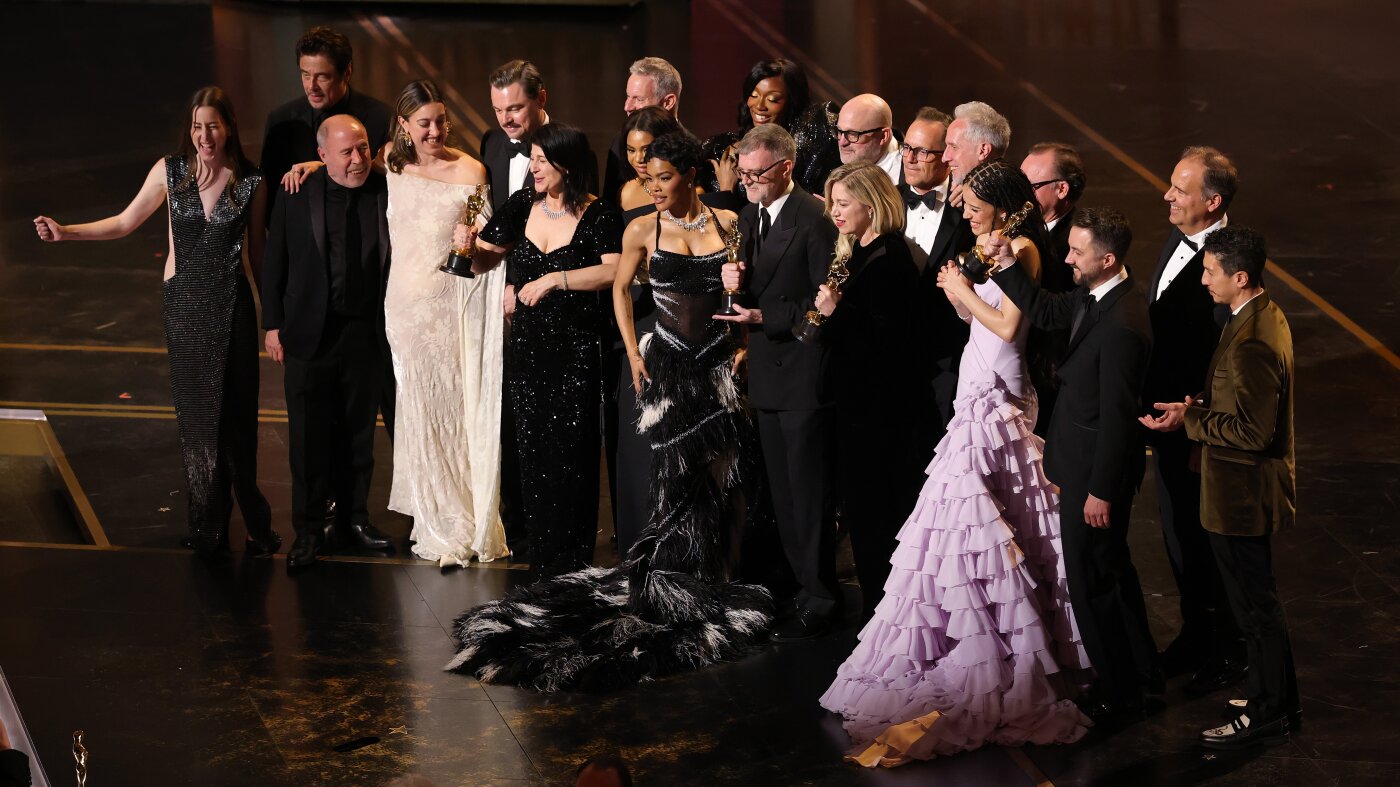
Best Actress 2026: Oscar Predictions & Navigating New Voting Patterns
The race for the Academy Award for Best Actress is perennially one of the most anticipated and hotly debated categories. As we look ahead to the 2026 Oscars, the question on every cinephile's mind isn't just *who* might deliver a standout performance, but *how* the evolving landscape of Academy voting will shape the ultimate victor. Predicting who will take home the coveted statuette, or indeed,
Who Won Best Actress 2026, has become an increasingly complex puzzle, demanding a deeper understanding of the forces at play within the industry's most prestigious voting body.
The era of predictable wins, often tied directly to Best Picture, is largely behind us. The Academy Awards have undergone significant transformations, particularly in their voting demographics and methodologies, making each year's outcome a testament to shifting tastes and priorities. This article delves into these new patterns, drawing insights from recent awards seasons, including the surprising results of the 2025 Golden Globes, to offer informed predictions and a comprehensive guide to what to watch for in the lead-up to the 2026 ceremony.
The Shifting Sands of Oscar Voting: A Deeper Dive
For decades, there was a strong correlation between Best Picture and Best Actor wins, and a significant, though slightly less pronounced, link between Best Picture and Best Actress. However, the introduction of the preferential ballot in 2009, coupled with the expansion of the Best Picture category from five to ten nominees, began to fundamentally alter these historical patterns. This shift fostered an environment where the "wealth" of awards began to spread across multiple films, rather than consolidating around a single dominant contender.
The logic is simple: with more Best Picture nominees, voter preferences are more likely to be divided, making it less probable for one film to sweep all major categories. While historically, Best Picture matched Best Actor 27 times and Best Actress 14 times, these statistics predominantly reflect an era of fewer Best Picture contenders. Today, it’s more common for a film to win at least one major award, even if it doesn't take home the top prize.
Yet, we've also seen powerful exceptions to this rule in recent years, demonstrating that a universally beloved film can still garner significant hauls:
- Anora: A remarkable five Oscars, including Picture, Director, Original Screenplay, Actress, and Editing, indicating a near clean sweep.
- Oppenheimer: Claimed seven Oscars, including Picture, Director, Actor, Supporting Actor, Editing, Cinematography, and Score, showcasing broad appeal.
- Everything Everywhere All At Once: Also secured seven awards, notably Picture, Director, Original Screenplay, Actress, Supporting Actor, Supporting Actress, and Editing, highlighting its critical and popular success.
- CODA: Achieved a perfect three-for-three, winning all its nominations for Picture, Adapted Screenplay, and Supporting Actor, proving that a smaller, deeply resonant film can still triumph.
These examples illustrate that while the "spread the wealth" model is generally prevalent, truly exceptional films with strong narratives and performances can still achieve widespread acclaim across various categories.
Golden Globe 2025: A Glimpse into 2026's Narrative?
The Golden Globe Awards often serve as an early indicator, or at least a powerful narrative builder, for the Oscars. The 2025 Golden Globes offered intriguing insights that could very well hint at the direction of the 2026 Best Actress race. In the Motion Picture — Drama category, Fernanda Torres’s surprise victory for her role in
I’m Still Here sent ripples through the awards circuit. She triumphed over a formidable lineup of Hollywood legends including Nicole Kidman, Pamela Anderson, Angelina Jolie, Tilda Swinton, and Kate Winslet. This win wasn't just unexpected; it highlighted a potential shift towards recognizing fresh talent or performances that resonate deeply, even if from lesser-known films or actors.
Equally compelling was Demi Moore’s emotional win for Best Actress in a Musical or Comedy Motion Picture. During her acceptance speech, she movingly shared, "I’m just in shock right now. I’ve been doing this a long time, like over 45 years, and this is the first time I’ve ever won anything as an actor." Moore's win was a powerful reminder that career narratives and long-overdue recognition can play a significant role in awards season. It tapped into a sentiment of honoring seasoned professionals who have dedicated their lives to the craft, a narrative that can often gain traction with a diverse voting body.
These Golden Globe outcomes suggest that for the 2026 Oscars, voters might be open to celebrating a broader range of performances: from unexpected breakouts to career-defining moments for established stars. For more on the specifics of these wins, you might want to read
Golden Globes Best Actress: Who Took Home the Prize?
Decoding the "New Academy" Effect
Perhaps the most significant factor in the increasing unpredictability of the Oscars, especially for categories like Best Actress, is the dramatic expansion and diversification of the Academy's voting body. From 2016 through 2019, approximately 3,000 new members were invited, a concerted effort to address criticisms of being "too white and too male." This influx brought in a wave of international, younger, predominantly non-white, non-male, and non-heterosexual voters.
This demographic shift has, in my opinion, fundamentally altered the traditional voting patterns. These new members often bring different perspectives, cultural backgrounds, and cinematic tastes, breaking away from historical conventions. They may be less swayed by industry politics or long-standing reputations and more inclined to vote based on raw performance, narrative authenticity, or a film's global resonance. The result is a more dynamic and less predictable voting bloc.
What does this mean for the Best Actress race?
- Global Recognition: Performances from international films or actresses previously overlooked by the Hollywood-centric Academy now have a stronger chance. Fernanda Torres's win at the Globes could be an early signal of this.
- Diverse Storytelling: Actresses in films that tackle complex, inclusive, or previously marginalized narratives may find favor with voters seeking impactful and representative storytelling.
- Authenticity Over Star Power: While star power is still a factor, authentic, transformative performances might outshine those relying solely on a performer's celebrity status.
- Narrative Resonance: The "story" behind a performance or an actor's career (like Demi Moore's long-awaited win) can create a compelling emotional hook for voters.
This "new Academy" is not necessarily following established "woke" rules, nor traditional conventions. Instead, they appear to be gravitating towards what they perceive as genuinely "good," universal stories that transcend categories and speak to broader human experiences. This makes the race for
Who Won Best Actress 2026 all the more exciting to observe.
Predicting the Unpredictable: Strategies for the 2026 Best Actress Race
Given the current unpredictable climate, how can one best approach predicting the Best Actress winner for 2026? It requires a multi-faceted approach, moving beyond simple historical correlations:
1.
Watch the Precursors, But With a Grain of Salt: Awards like the Golden Globes, SAG Awards, Critics' Choice, and BAFTA still offer valuable insights. However, as the pundit who correctly predicted
Anora for PGA, DGA, and the Oscar but missed its Golden Globe, demonstrated, these awards can diverge. Look for consensus across multiple precursors, but also note any surprising wins that might indicate a unique groundswell of support.
2.
Identify the "Narrative": What story is being told around a particular performance or actress? Is it a career resurgence, a breakout moment, a challenging role overcome, or a long-overdue recognition? These narratives can be powerful drivers for voters.
3.
Consider the Film's Overall Strength and Resonance: While Best Actress can win independently of Best Picture, a strong film with critical buzz and a compelling story can elevate its lead performance. Pay attention to films that are gaining momentum in the Picture, Director, and Screenplay categories.
4.
Track International and Indie Buzz: With the influx of international members, performances from non-English language films or independent features might have a stronger showing. Keep an eye on major film festivals (Cannes, Venice, Toronto, Sundance) for early breakouts.
5.
Assess Critical Reception vs. Popularity: Sometimes, a critically acclaimed performance might not resonate with the broader Academy, and vice versa. Look for performances that strike a balance, or those that have a particularly strong emotional impact.
6.
Look for Transformative Roles: The Academy often favors roles that involve significant physical or emotional transformation, or portray real-life figures with gravitas.
The Best Actress category is now a reflection of a more diverse, globally aware, and nuanced voting body. This makes for a more thrilling and less predictable race. For a deeper dive into these predictive strategies, explore
Best Actress Oscar: Predicting the Winner Amidst New Voter Shifts.
Conclusion
As the 2026 Oscar season approaches, the quest to determine
Who Won Best Actress 2026 remains one of the most exciting aspects of the awards cycle. The insights from the 2025 Golden Globes, with surprise wins and emotional career acknowledgements, underscore the dynamic shifts within the Academy. The diversification of the voting body has injected new energy and perspectives, ensuring that past patterns no longer guarantee future outcomes. Predicting the winner now requires an understanding of nuanced narratives, global cinematic trends, and the powerful impact of authentic, resonant performances. The 2026 Best Actress race promises to be a captivating journey, celebrating talent that truly defines the year in film, regardless of traditional expectations.